
Introduction: The Ocean’s Gentle Giant
The manta ray is one of the most mesmerizing creatures in the ocean. With wingspans that can reach up to 20 feet and a graceful, almost ethereal movement through the water, the manta ray has captivated human imagination for centuries. It is no surprise, then, that this magnificent creature has become a powerful and popular motif in the world of tattoo art. But what does a manta ray tattoo truly mean? Beyond its striking visual appeal, the manta ray carries deep symbolic weight across multiple cultures, representing everything from freedom and protection to spiritual guardianship and ancestral connection.
In this comprehensive guide, we will explore the rich meaning behind manta ray tattoos, tracing their origins from ancient Polynesian and Hawaiian traditions to modern interpretations. Whether you are considering your first tattoo or adding to an existing collection, understanding the symbolism behind this oceanic icon will help you choose a design that resonates with your personal journey.
The Ancient Roots: Polynesian and Hawaiian Symbolism
The Aumakua of the Sea
In Hawaiian culture, the manta ray—known as hāhālua—holds a sacred place in the spiritual hierarchy. Hawaiians traditionally believe that ancestors can take the form of certain animals after death, becoming protectors for their descendants. Manta rays are classified as ‘aumakua: god-like creatures that take animal form and serve as family or personal guardians.
For families with manta ray aumakua, these gentle giants serve as spiritual guardians, swimming alongside canoes to guide fishermen safely or appearing in times of danger to provide protection. These families would never harm a manta ray, believing it to be the embodiment of their ancestors watching over them. The distinctive markings on manta rays’ ventral sides—unique to each individual, just like human fingerprints—represent the connection between the mantas and the families they protect. A manta ray near shore was often seen as a powerful sign or message from ancestors.
The Kumulipo Connection
The manta ray also appears in the Kumulipo, the sacred Hawaiian creation chant. This ancient genealogical chant establishes the hierarchy of all living things and classifies manta rays among the higher forms of sea creatures: deep divers who access realms beyond human reach. This placement in the creation myth elevates the manta ray from mere animal to a being of profound spiritual significance, connected to the mysteries of the deep ocean and the divine.
Polynesian Freedom and Grace
In broader Polynesian culture, the manta ray is often associated with freedom, protection, and grace. Its majestic presence as it glides through the ocean embodies a sense of freedom and independence. Additionally, manta rays are known for their protective nature, as they are often seen swimming alongside other marine creatures. Their graceful movements and gentle demeanor further contribute to their symbolism of grace and elegance.
Overall, the manta ray encapsulates the qualities of freedom, protection, and grace in Polynesian sea creature symbolism. For those who choose a manta ray tattoo, these qualities become a permanent reminder of their personal values and aspirations.
Beyond Hawaii: Global Cultural Significance
Micronesian Maritime Mythology
Across Micronesia, particularly in the Caroline Islands, manta rays feature prominently in creation myths and traditional stories. One legend tells of a goddess who took the form of a manta ray to help fishermen during difficult times by guiding them to abundant fishing grounds. In some island communities, specific manta rays were believed to be embodiments of ocean gods. Fishermen would observe manta behavior to predict weather patterns and optimal fishing conditions—a practice that actually aligns with modern scientific observations, as manta behavior often correlates with plankton abundance and weather changes.
The people of Yap, in particular, incorporated manta ray imagery into their traditional dances, mimicking the manta rays’ graceful movements to honor their importance to oceanic life and human sustenance. This cultural practice demonstrates how deeply intertwined the manta ray is with the identity and daily life of Pacific Island communities.
Southeast Asian Reverence
In parts of Southeast Asia, particularly among communities in the Philippines and Indonesia, manta rays are revered as symbols of grace, harmony, and the fluid nature of life. Their seemingly effortless movement through water, appearing to fly rather than swim, inspired philosophical concepts about navigating life’s challenges with the same elegance.
Indonesian fishermen from certain regions traditionally believed that manta rays carried the souls of those lost at sea, providing them safe passage to the afterlife. This belief led communities to establish taboos against harming mantas, creating early forms of conservation practices that protected these vulnerable species. In some Pacific Island cultures, traditional tattooing incorporated manta ray motifs to protect the wearer on ocean journeys. The distinctive diamond shape of the manta, with its wings spread wide, became a powerful symbol in art and cultural expressions.
The Devil Fish Misconception
Not all cultural interpretations of manta rays have been positive. European sailors often misunderstood the nature of these massive creatures. Manta rays, just like their close relatives, the mobula rays, sometimes jump out of the water—a phenomenon called breaching. This jumping behavior, combined with their dark dorsal colors and cephalic fins that can resemble “horns,” led to manta rays being labeled “devil fish” or “devil rays.”
Ancient mariners’ accounts tell tales of mantas attacking ships or dragging sailors to their doom—fabricated stories that unfortunately contributed to fear rather than understanding. These misconceptions persisted in Western culture well into the 20th century, with early films and literature often portraying mantas as dangerous sea monsters rather than the gentle filter feeders they are now known to be. It wasn’t until the 1970s that attitudes toward manta rays began to change, illustrating how cultural interpretation can significantly influence human relationships with wildlife.
Today, many modern tattoo enthusiasts deliberately choose the manta ray to reclaim its image from these negative associations, celebrating its true nature as a gentle, intelligent, and graceful creature.
Core Symbolism: What a Manta Ray Tattoo Represents
1. Freedom and Independence
The most universal meaning associated with manta ray tattoos is freedom. The manta ray moves through the ocean with no boundaries, no restrictions, and no need for a fixed home. It is a creature of the open water, traveling vast distances across the Pacific and Indian Oceans. For the wearer, a manta ray tattoo can symbolize a desire for freedom—freedom from constraints, freedom to explore, and freedom to live life on their own terms.
This symbolism resonates particularly with travelers, surfers, sailors, and anyone who feels a deep connection to the open road or the open sea. The manta ray’s wings, spread wide in flight, become a visual metaphor for embracing life’s journey without fear.
2. Grace Under Pressure
Despite their massive size—manta rays can weigh up to 3,000 pounds—these creatures move with extraordinary grace and fluidity. They navigate ocean currents, avoid predators, and hunt for food with a seemingly effortless elegance. This duality of strength and grace makes the manta ray a powerful symbol for those who strive to handle life’s challenges with poise and dignity.
As one tattoo artist noted, the manta ray stands for “Graceful Strength”—a reminder that true power does not need to be aggressive or domineering.
It is a symbol for those who have faced adversity and chosen to respond with resilience rather than anger, with flexibility rather than rigidity.
3. Protection and Guardianship
In Polynesian tattoo tradition, manta rays are revered as symbols of guardianship and ancient wisdom. The belief that manta rays protect and impart wisdom to those who honor them makes this tattoo particularly meaningful for individuals who see themselves as protectors—of family, of friends, or of their own inner peace.
The manta ray’s protective symbolism extends to the concept of safe passage. Just as the manta ray was believed to guide fishermen safely home, the tattoo can serve as a talisman for travelers, ensuring safe journeys and protection from harm.
4. Connection to Ancestry and Spirituality
For those with Hawaiian or Polynesian heritage, a manta ray tattoo can be a profound way to honor ancestral connections. The concept of ‘aumakua—ancestral spirits in animal form—means that the manta ray is not just a symbol but a potential spiritual guardian. Even for those without direct Polynesian heritage, the manta ray can represent a connection to the wisdom of the past, to the cycles of nature, and to the deeper mysteries of life.
5. Intelligence and Awareness
Manta rays possess the largest brain-to-body ratio of any fish, and recent research has revealed their surprising intelligence. They can recognize themselves in mirrors—a sign of self-awareness—and have been observed engaging in complex social behaviors. A manta ray tattoo can symbolize intelligence, curiosity, and the pursuit of knowledge. It is a fitting choice for thinkers, learners, and those who value mental acuity as much as physical strength.
6. Adaptability and Resilience
Manta rays have survived for millions of years, adapting to changing ocean conditions and evolving into the magnificent creatures we see today. Their ability to thrive in diverse marine environments—from coral reefs to open ocean—makes them a symbol of adaptability and resilience. For someone who has overcome significant life changes or challenges, the manta ray tattoo can represent the ability to adapt, evolve, and continue moving forward.
Design Elements and Their Meanings
Traditional Polynesian and Tribal Styles
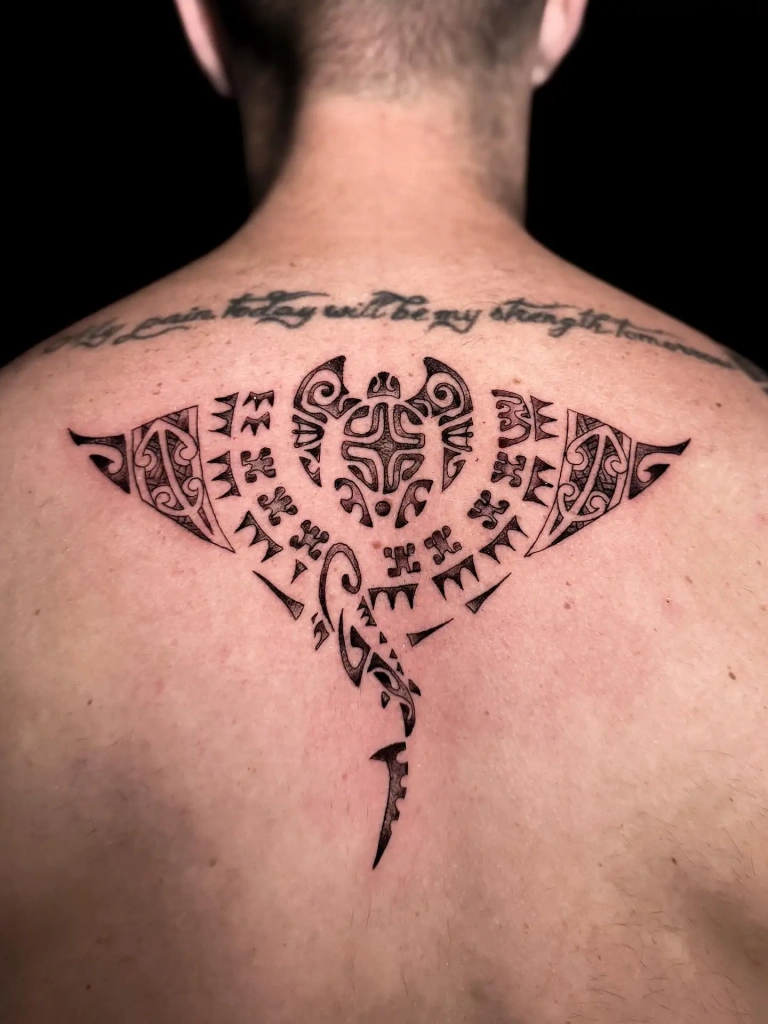
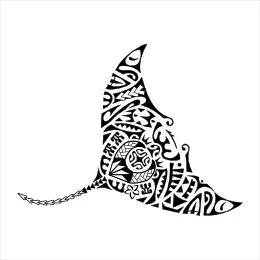
Polynesian manta ray tattoos are typically rendered in the bold, black tribal style that has become iconic across the Pacific. These designs incorporate traditional motifs that carry their own symbolic weight:
- Tiki figures: Placed on the tips of the manta’s wings, tiki symbols provide protection from all directions.
- Turtle motifs: When combined with the manta ray, turtles symbolize family, longevity, and navigation. A turtle in the center of a manta tattoo can represent a strong, united family.
- Koru (fern frond): Represents new beginnings, growth, and rejuvenation.
- Spearheads: Symbolize perseverance and the ability to overcome life’s challenges.
- Enata (human figures): Can represent family members, ancestors, or the wearer themselves.
- Sun and wave patterns: Symbolize the ocean’s power and the life-giving energy of the sun.
Realistic and Modern Interpretations
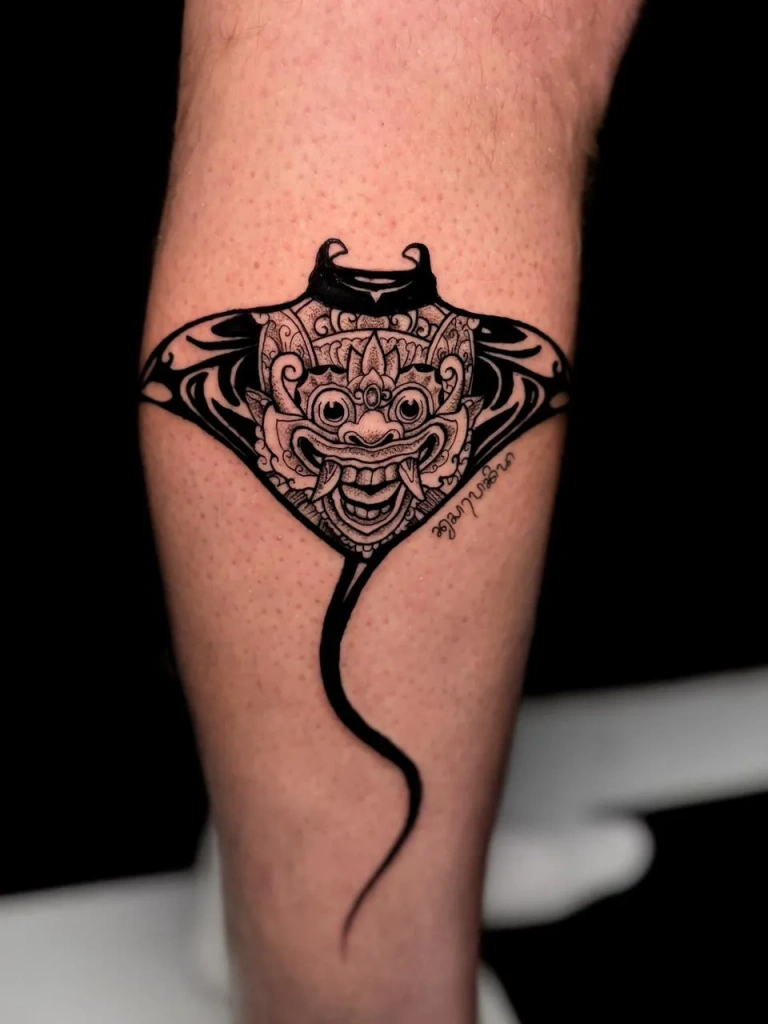
Modern manta ray tattoos often take a more realistic approach, using shading and detail to capture the creature’s majestic form. These designs may incorporate:
- Watercolor effects: Splashes of blue and turquoise to represent the ocean environment
- Geometric patterns: Combining the manta’s natural shape with sacred geometry
- Minimalist line work: Simple, elegant outlines that focus on the manta’s distinctive silhouette
- Black and grey realism: Highly detailed portraits that showcase the manta’s unique facial markings and body texture
Placement and Size Considerations
The manta ray’s distinctive diamond shape—with its broad wings and tapering tail—makes it a versatile design for various body placements:
- Back: The broad surface of the back is ideal for large, detailed manta ray designs, allowing the wings to spread fully across the shoulder blades or upper back.
- Chest: A manta ray centered on the chest can symbolize protection of the heart, with the wings extending across the pectoral muscles.
- Thigh: The length of the thigh accommodates the manta’s tail, creating a dynamic vertical composition.
- Forearm: Smaller, more minimalist designs work well on the forearm, serving as a constant visible reminder of the tattoo’s meaning.
- Ribcage/Side: The curved shape of the ribs can complement the manta’s wing curvature, creating a design that flows with the body’s natural lines.
Personal Stories: Why People Choose the Manta Ray
A Symbol of Family Protection
One custom design created for a client named John featured a manta ray with a turtle at its center. The turtle symbolized a strong, united family, with the front flippers protecting his sons on one side and his daughter on the other. The warrior figure in front of the turtle represented John himself, protecting and guiding his children. Other elements on the wings symbolized prosperity, voyages, and adventure, while tiki figures on the wing tips protected the family from all sides. The manta itself was a symbol of beauty and freedom.
A Union of Souls
Another design, named Moemoe (meaning both “marriage” and “dream”), was created for a couple to symbolize their union and shared passion for the sea. The manta ray represented freedom, beauty, and elegance, while a warrior figure in its center protected the symbol of the couple. A sun surrounded by shark teeth and mountains symbolized protection and stability, while a koru inside a turtle represented new life—their daughter. The wings included a hammerhead shark and gecko, representing tenacity, sociality, and health.
Meyer’s Ocean Journey
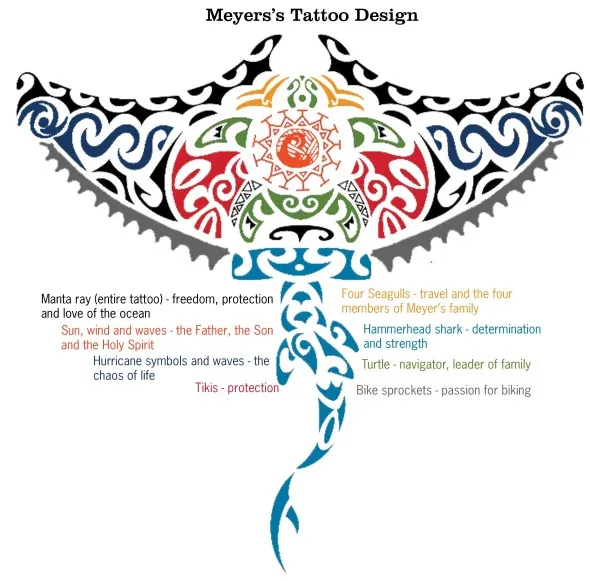
A particularly detailed design created for Meyer incorporated multiple symbolic elements within the manta ray form. The entire tattoo represented freedom, protection, and love of the ocean. At its center, a sun symbolized the Father, the Son, and the Holy Spirit, while hurricane symbols and waves represented the chaos of life. Tikis provided protection, four seagulls represented travel and the four members of Meyer’s family, a hammerhead shark symbolized determination and strength, a turtle represented the navigator and leader of the family, and bike sprockets reflected a passion for cycling.
These stories illustrate how the manta ray serves as a canvas for deeply personal narratives, allowing each wearer to weave their own meaning into the ancient symbolism.
Modern Interpretations and Conservation
Angels of the Sea
Even in our modern era of scientific understanding, manta rays continue to inspire awe and generate new cultural narratives. Divers and snorkelers who encounter mantas often describe the experience in nearly spiritual terms, feeling a profound connection when making eye contact with these intelligent creatures. Some even refer to manta rays as “angels of the sea” due to their graceful, wing-like appearance and gentle demeanor.
This modern nickname has influenced tattoo design, with some artists incorporating angelic or celestial elements into manta ray tattoos—halos, stars, or ethereal lighting effects that emphasize the creature’s otherworldly beauty.
Conservation and Cultural Heritage
The cultural importance of manta rays helped protect them in many traditional societies. When communities viewed mantas as spiritual beings or symbols of prosperity, they often created rules against hunting them, establishing a basic form of conservation based on cultural beliefs rather than scientific principles. Today, these cultural connections support conservation efforts: when we protect manta rays, we are more successful if we include both tradition and scientific research. Communities are more likely to support conservation efforts when they respect their cultural values regarding mantas.
For the modern tattoo enthusiast, choosing a manta ray design can be a way to honor not just personal symbolism but also the cultural heritage and conservation efforts that keep these magnificent creatures swimming in our oceans.
Choosing Your Manta Ray Tattoo: A Guide
Finding Your Personal Meaning
Before committing to a manta ray tattoo, take time to reflect on what the creature means to you personally. Is it freedom? Protection? Grace? A connection to the ocean? A tribute to your heritage? The more specific your personal connection, the more meaningful your tattoo will be.
Researching Artists
Manta ray tattoos require a skilled artist, particularly if you choose a detailed tribal or realistic design. Look for artists who specialize in:
- Polynesian or tribal tattooing
- Marine life or ocean-themed tattoos
- Black and grey realism
- Custom designs that incorporate personal symbolism
Review portfolios carefully to ensure the artist’s style aligns with your vision.
Customizing Your Design
Work with your artist to create a design that tells your unique story. Consider incorporating:
- Traditional motifs that hold personal significance
- Names, dates, or coordinates that mark important life events
- Complementary marine life (turtles, sharks, whales) that add layers of meaning
- Ocean elements (waves, coral, plankton) that ground the manta in its natural environment
Respecting Cultural Heritage
If you are not of Polynesian or Hawaiian descent, approach traditional motifs with respect and understanding. Research the meanings behind the symbols you choose, and consider consulting with cultural practitioners to ensure your design honors rather than appropriates these ancient traditions. Many artists who specialize in Polynesian tattooing are happy to educate clients about the cultural significance of their work.
Conclusion: The Eternal Dance of the Manta Ray
The manta ray tattoo is far more than a beautiful image of a marine creature. It is a symbol steeped in thousands of years of cultural heritage, carrying meanings of freedom, protection, grace, and spiritual guardianship. From the sacred ‘aumakua of Hawaii to the protective talismans of Micronesia, from the philosophical grace of Southeast Asia to the modern “angels of the sea,” the manta ray continues to inspire and protect those who honor it.
When you choose a manta ray tattoo, you are not just selecting a design—you are joining a lineage of ocean lovers, spiritual seekers, and free souls who have looked to this gentle giant for guidance. You are carrying a piece of the ocean’s mystery with you, a reminder to move through life with grace, to protect what you love, and to never stop exploring the vast, beautiful waters of existence.
Whether rendered in bold black tribal lines or delicate realistic shading, the manta ray tattoo remains one of the most meaningful and visually striking choices in the world of body art. Its wings, spread wide in eternal flight through the ocean depths, remind us all that we, too, can rise above life’s currents and glide toward our own horizons.
Ready to take the plunge? Find a skilled artist, reflect on your personal connection to this magnificent creature, and let the manta ray carry you toward your next adventure—permanently etched in ink, forever swimming across your skin.
Did you find this guide helpful? Share your manta ray tattoo story in the comments below, or tag us in your ink on social media!